Markets diverge widely in the third quarter AI and health care lead stocks, bonds slide, alternatives continue to climb Terrence Demorest, Partner and Chief Investment Officer - Public Markets and ESG
Terrence Demorest, Partner and Chief Investment Officer - Public Markets and ESG
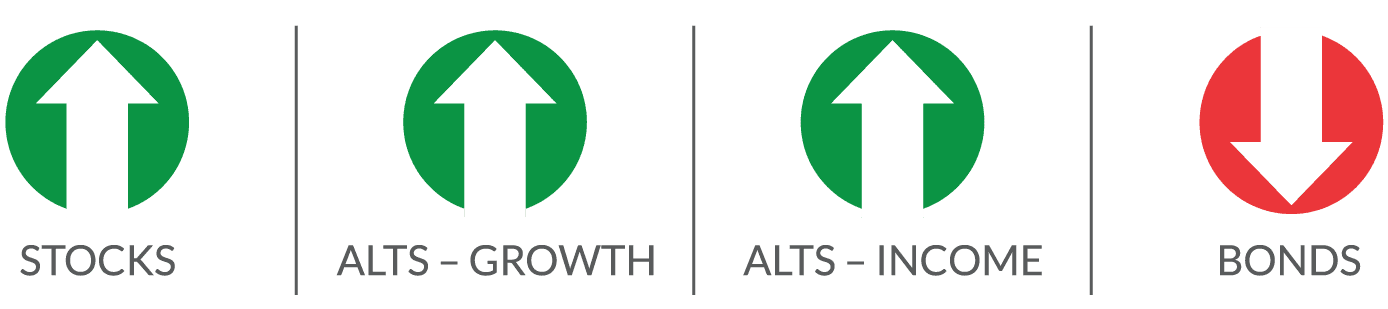
The third quarter of 2026 rewarded patience and perspective. A narrow group of large technology and health care companies pushed the S&P 500 modestly higher, and while most of the broader market faced headwinds, well-diversified portfolios held up well. Private markets also served their intended role, generating returns from sources distinct from the public markets and providing resilience as public assets came under pressure.
U.S. large-cap stocks gained +2.3% during the quarter, though the headline number flatters the broader market. In reality it was a handful of companies that drove the bulk of the gains, while the average stock in the index declined. The global stock market, comprising a blend of U.S. and international equities, rose by a more modest +1.6%, as international markets contributed only marginally to overall returns.
Bonds faced pressure during the quarter, declining -3.5% as inflation persisted and the Federal Reserve raised interest rates in September, bringing the federal funds rate to 4.00%. Policymakers made clear that, with inflation still running above their 2% target, they are not yet ready to stand down. Falling bond prices pushed yields higher, but even with falling prices income generation from bonds remained a meaningful contributor to portfolios throughout the period.
Against this backdrop, alternative investments continued to demonstrate their worth. Private credit maintained its track record of delivering consistent, positive returns and generating reliable income while public bond markets moved in the opposite direction. Private equity remained focused on long-term value creation, insulated from the quarter-to-quarter volatility that characterized public markets. The divergence between private and public market performance this quarter is precisely the outcome that a well-diversified portfolio is designed to capture.
Looking ahead, the investment landscape is shaped by a Federal Reserve working to bring inflation back to target, an artificial intelligence investment cycle that continues to drive enormous capital spending, and an underlying U.S. economy that, with unemployment at 4.2%, remains on solid footing. The combination of higher rates and persistent inflation calls for a measured approach, but the long-term case for staying invested across public and private markets remains as compelling as ever.
Stocks
The third quarter told two very different stories depending on where you looked within the equity market. At the index level, the S&P 500 gained +2.3% for the quarter. Beneath the surface, market breadth was narrow, with a small number of large technology and health care companies accounting for the vast majority of gains. The global stock market rose +1.6%, with international developed markets gaining just +0.9%, and emerging markets essentially flat, at -0.4%.
Artificial intelligence remained the defining investment theme of the quarter, and while the narrative grew more nuanced as the quarter progressed, the underlying demand story remained intact. AI signals were strong early in the quarter, with semiconductor and infrastructure companies reporting revenue growth well ahead of expectations on the back of surging AI-related orders. As the quarter wore on, results became more mixed, and questions emerged about the pace at which AI spending would translate into broad corporate profitability. A late September rally in technology stocks helped close the quarter on an encouraging note for the sector.
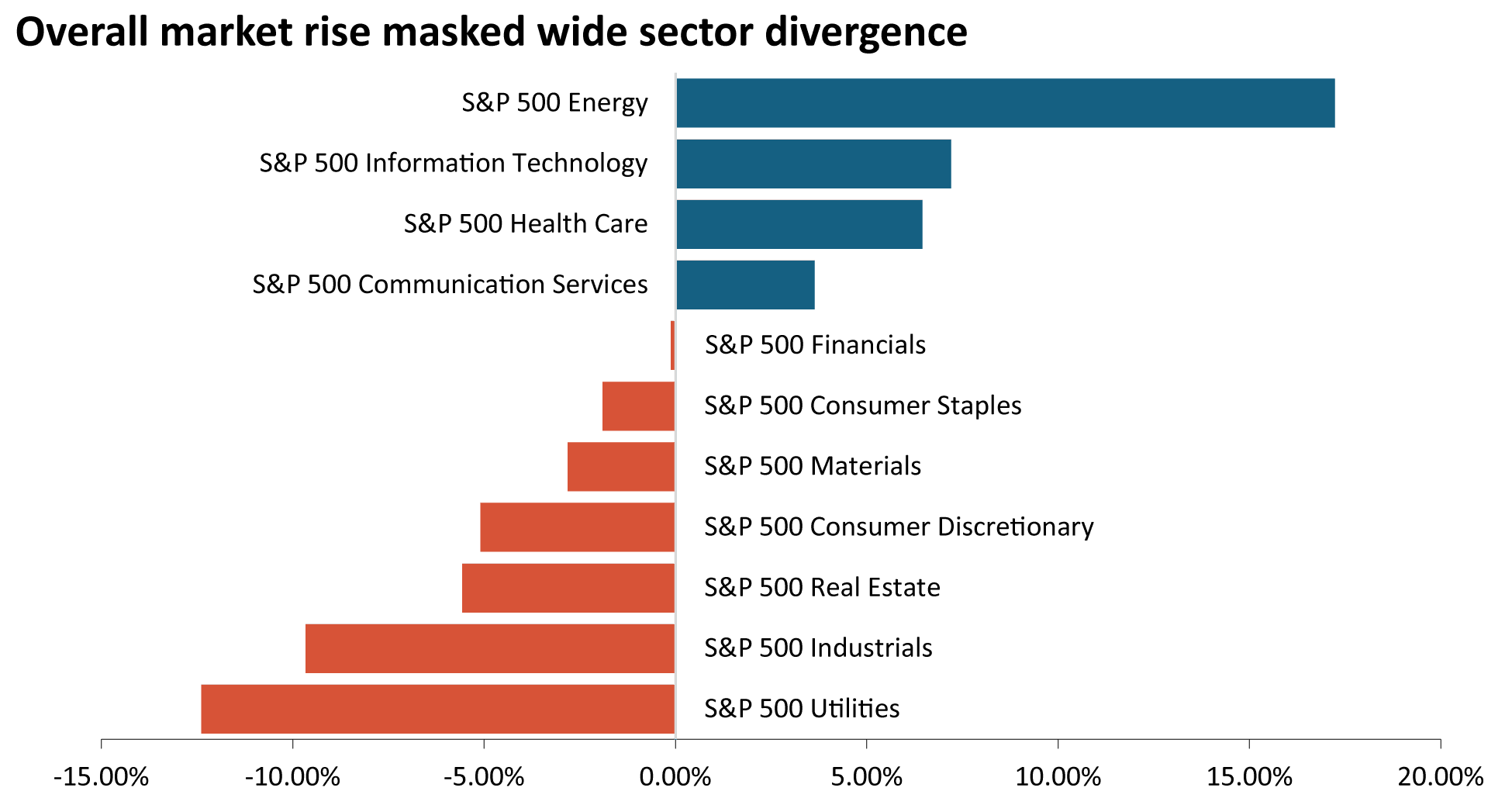
This market divergence is well-reflected in the varied performance among individual market sectors, as the chart below shows: Energy, benefiting from rising oil prices, led all sectors with a gain of +17.2%, followed by information technology at +7.2% and health care at +6.5%. Communication services added +3.6%. The rest of the market struggled. Financials were essentially flat at -0.1%, consumer staples fell -1.9%, and materials declined -2.8%. Consumer discretionary dropped -5.1% and real estate fell -5.6% as higher interest rates weighed on rate-sensitive businesses. Industrials fell -9.7%, and utilities bore the most pain of any sector, declining -12.4% as rising long-term interest rates made their dividend yields comparatively less attractive.
Small-cap stocks had a particularly difficult quarter, with the Russell 2000 declining -7.2% and marking a sharp reversal from the strength small caps showed in the third quarter of 2025. Smaller companies, which tend to carry more floating-rate debt and are more sensitive to borrowing costs, bore the brunt of the Fed’s September rate increase.
The quarter served as a useful reminder that index-level returns can be misleading but also that, even in a narrow market, there are meaningful opportunities for well-positioned investors. Corporate earnings trends, the trajectory of AI-related capital spending, and the Federal Reserve’s next moves will be the key variables shaping equity performance in the months ahead.
Alternatives-Growth
Private equity markets remained active throughout the third quarter, continuing to serve as a source of long-term growth and diversification that operates largely independent of public market sentiment. Deal activity remained healthy and, by some measures, accelerated as corporate demand for capital has rarely been greater. The private equity holdings in client portfolios, including the Cascade Private Capital Fund and the StepStone Private Equity Strategies Fund, continued to capitalize on that demand by purchasing existing ownership stakes at discounts and co-investing alongside established managers on favorable terms.
In the final days of the quarter, we added a new position to client portfolios: the Cascade Real Assets Fund (CRAFX). Like our other alternatives holdings, this strategy focuses on secondaries and co-investments, but its focus is private real estate. After several difficult years driven largely by rising interest rates, private real estate valuations have been reset to more attractive levels, and signs of a recovery are beginning to emerge. We believe this is a compelling moment to establish a position, and we expect this addition to broaden our alternatives exposure and contribute meaningfully to long-term portfolio growth.
Alternatives-Income
Private credit delivered another quarter of positive, consistent returns, maintaining its track record even as the public bond market experienced one of its more difficult quarters in recent memory. The asset class continued to generate reliable income with meaningfully lower volatility than traditional fixed income, and the quarter offered a clear illustration of why private credit and traditional bonds play very different roles in a portfolio.
Activity across the private credit landscape was robust during the quarter. Demand for private credit financing continues to expand as companies seek flexible alternatives to traditional bank lending, and managers have responded accordingly. Redemption requests at several of the larger private credit funds declined meaningfully from the prior quarter, a sign that the concerns that drew headlines earlier in the year are fading. The fundamentals underlying private credit remain sound: borrowers continue to service their obligations, default rates remain low, and loans are typically secured by tangible assets including corporate cash flows and real estate.
This quarter’s bond market decline actually highlights one of private credit’s most attractive qualities: its floating-rate structure means that higher short-term rates generally translate into higher income for investors, rather than the price losses that fixed-rate bonds experience. Patient investors continue to be rewarded for the illiquidity premium that private credit offers, and the case for maintaining a meaningful allocation here remains strong.
Bonds
The U.S. bond market had a challenging third quarter, declining -3.5% as measured by the Bloomberg U.S. Aggregate Bond Index. The primary driver was the Federal Reserve’s decision in September to raise the federal funds rate by a quarter point to 4.00%, a move that caught some investors off guard after the Fed had held rates steady for much of the year. Rising yields pushed bond prices lower across maturities, with longer-duration bonds absorbing the most pain.
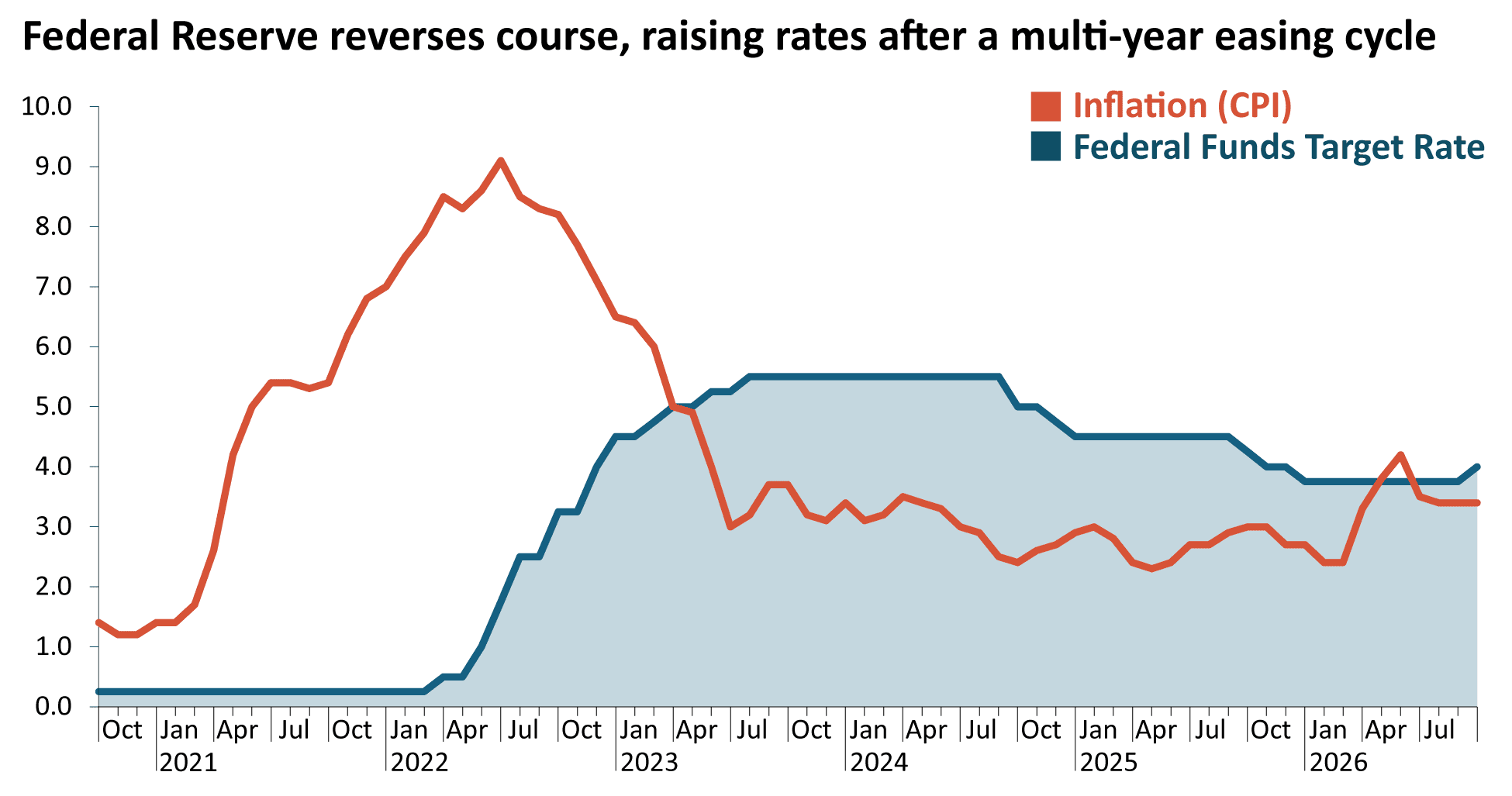
The rate increase reflected the Fed’s continued focus on bringing inflation back to its 2% target. The unemployment rate stood at 4.2% as of September, giving the Fed room to prioritize inflation over growth concerns. Markets ended the quarter pricing in at least one additional rate increase before year-end, though the Fed has consistently emphasized that it remains heavily data-dependent as it monitors the economy closely.
The quarter’s poor bond market performance stands in sharp contrast to the +7.3% gain bonds delivered in all of 2025, when a falling rate environment provided a meaningful tailwind. That said, bonds continue to offer attractive income at current yield levels, and the economy is not flashing warning signs that would suggest a much more aggressive tightening cycle ahead.
Our bond portfolios are currently positioned with an emphasis on shorter maturities, which are less sensitive to further rate increases. We are watching the interest rate environment closely, and are prepared to make adjustments as conditions evolve. Should rates remain elevated or move higher from here, we may see that as an opportunity to extend duration and capture more attractive yields over the longer term. We will continue to evaluate the landscape carefully and make changes when we believe the timing supports doing so.
Recent posts
Markets diverge widely in the third quarter
AI and health care lead stocks, bonds slide, alternatives continue to climb
Sources
Source for charts: Bloomberg as of Oct. 1, 2026.
Disclosures
This content was prepared by Westmount Partners, LLC (“Westmount”). Westmount is registered as an investment advisor with the U.S. Securities and Exchange Commission, and such registration does not imply any special skill or training. The information contained in this content was prepared using sources that Westmount believes are reliable, but Westmount does not guarantee its accuracy. The information reflects subjective judgments, assumptions and Westmount’s opinion on the date made and may change without notice. Westmount undertakes no obligation to update this information. It is for information purposes only and should not be used or construed as investment, legal or tax advice, nor as an offer to sell or a solicitation of an offer to buy any security. No part of this content may be copied in any form, by any means, or redistributed, published, circulated or commercially exploited in any manner without Westmount’s prior written consent.
Past performance is not indicative of future results. Investment returns will fluctuate, and investors may experience a loss. No guarantee or representation is made that any investment strategy will be successful or achieve any particular results. All investments involve risk, including the possible loss of principal. Different types of investments involve varying degrees of risk, and there is no assurance that any specific investment will be profitable.
The financial advice and recommendations that we provide are tailored to each client’s unique circumstances. Please remember to contact us if there are any material changes in your financial situation or investment objectives, or if you wish to add or modify any restrictions to your investment portfolios.
If you have any comments or questions about this content, please contact us at info@westmount.com.